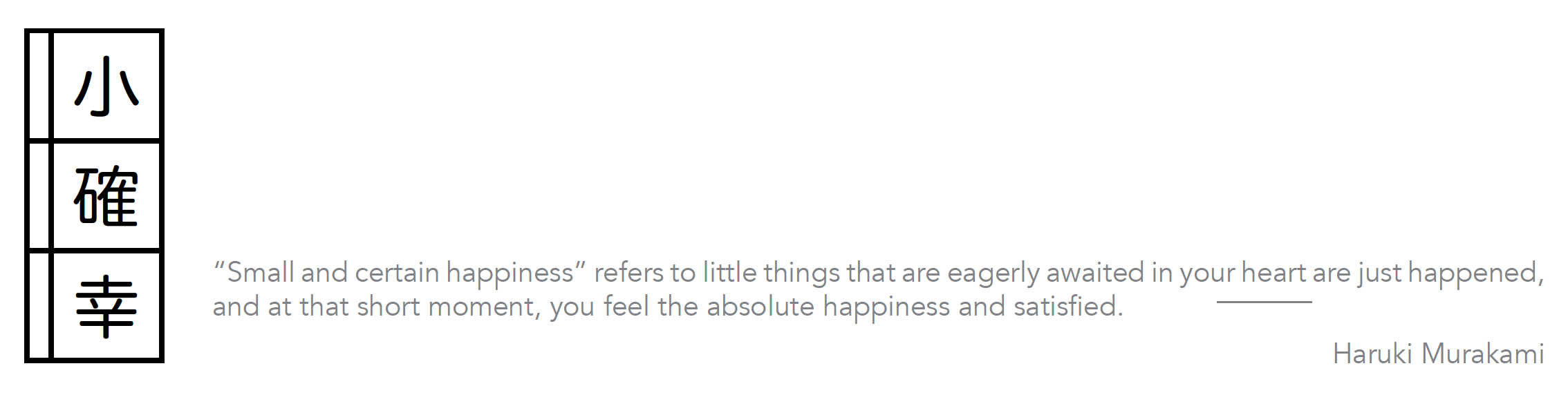
I started my thesis based on a quote from Haruki Murakami, “little but certain happiness.” I chose the demography of Millennial as the focus, and I started to research anything that is negative inside this generation. I begin with a very general topic, and then I narrow it down to the financial factor of Millennials.
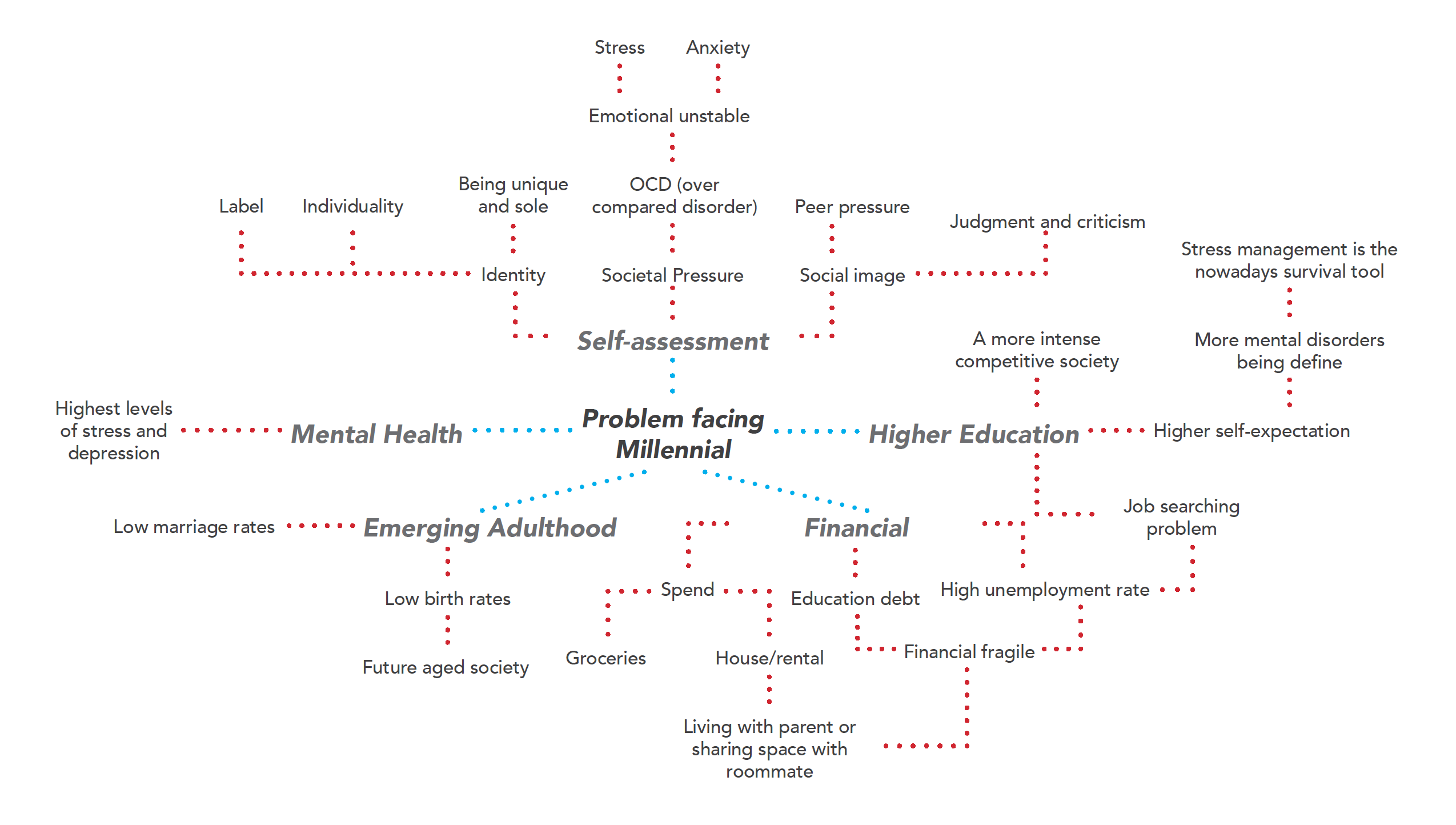
From the start point, I go straight to do lots of research about negative thing within Millennial. (The above is a diagram about my research.)
Stress taking and pressure managing appear to be the 21th-century survival tool, either you get eliminated in the system or continuing to survive until retirement. When people are feeling stress and frustrated all negative emotions, their dopamine will suddenly stop generating then their brain will start seeking a way to re-increase dopamine secretion. The brain will warn our nervous system to have feedback to raise the secretion. Thus, it triggers us to do things that we feel pleasure to do, that will somewhat involving addiction relapse, compulsive shopping behavior, bulimia, hypersomnia, etc.
Thereby I pick stress, financial, and consumption as keywords for the primary research topic, and I hosted a workshop to do some experiment for design insight.
The general goal of my workshop is to study how Millennials use their money, their credit card use behaviour and their interaction with each other within a competitive environment. I designed my experiment and observation into a game, and after the game, there was a discussion section for me to gain more insight and have a little from my workshop participant. The discussion topic will mainly around CSD (Compulsive Shopping Disorder) and Millennial financial.
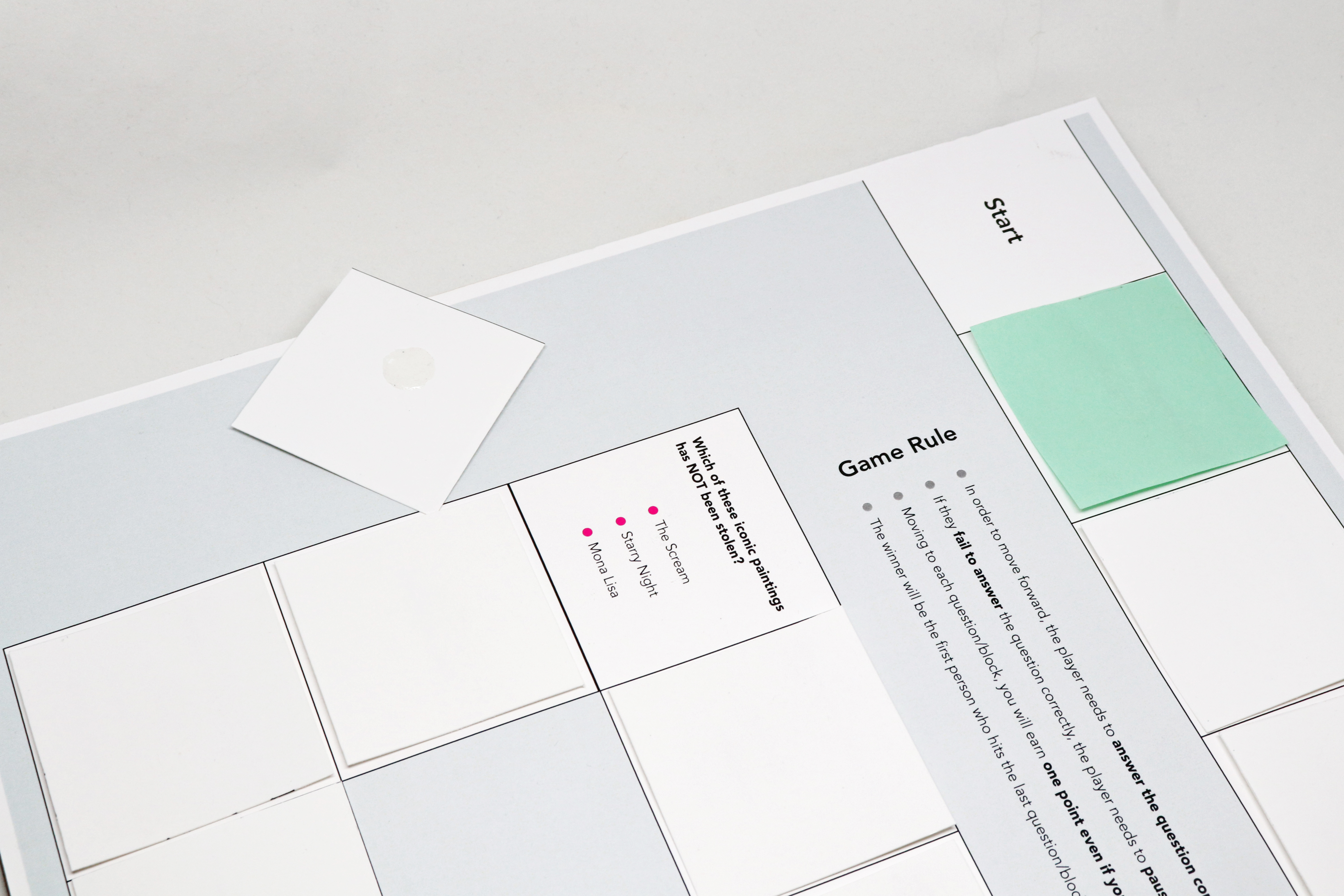
In order to move forward, the player needs to answer the question correctly. If they fail to answer the question correctly, the player needs to pause one round to roll the dice. The winner will be the first person who hits the last question/block. Moving to each question/block, you will earn one point even if you fail to answer the question.
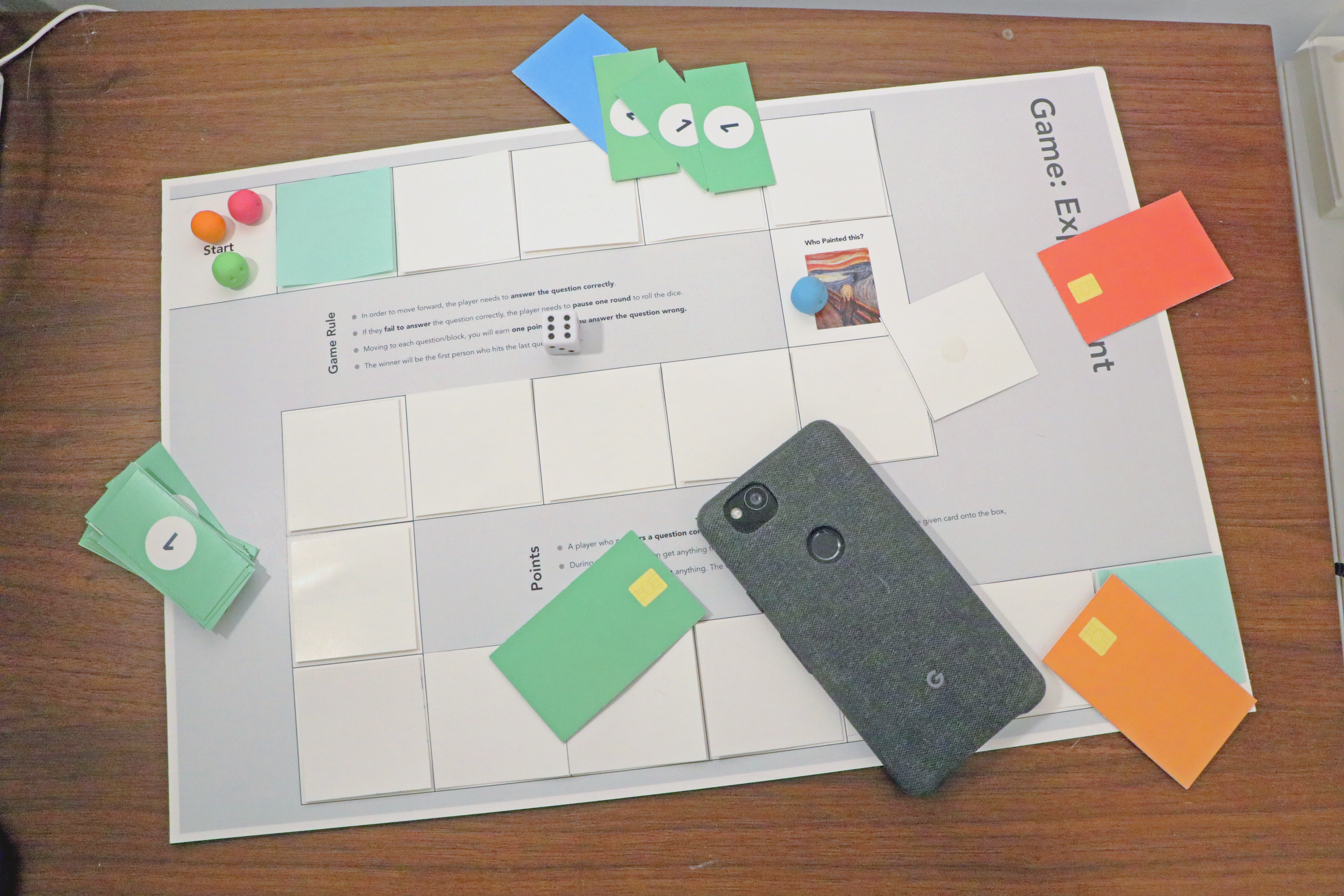
Player who answers a question correctly will gain three points. During the game, you can get anything from the reward box without giving out points by tapping the given card onto the phone, or you can choose not to get anything. The winner will receive a prize.
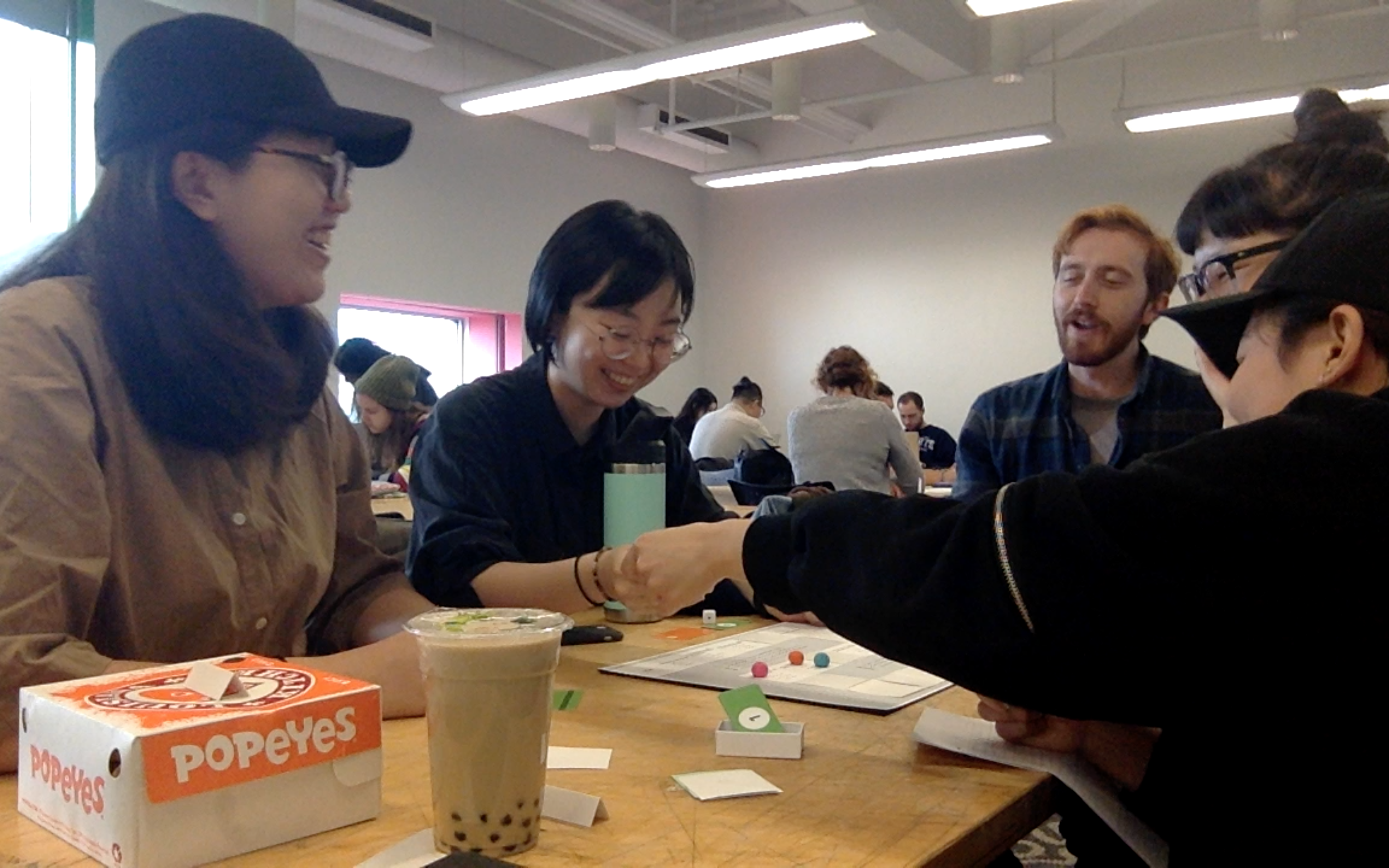
Price list of the rewards:
Bubble tea: Three points
Fries: Two points
The participants’ age is around 26 years old. All of the participants did not use their credit cards, and 75% of the participants used their points wisely. 50% of the participants had a plan before they spent their points, and only one participant tended to spend all of her points to purchase rewards.
In this workshop, the gaming environment is not as competitive as I thought; they use the game to learn with each other instead of competing with others. Some of them knew the answer to the question, but they would not steal from the answer; instead, they waited for the answer’s permission before they answered the question. Overall, only 25% of the participants exhibited compulsive shopping behaviour.
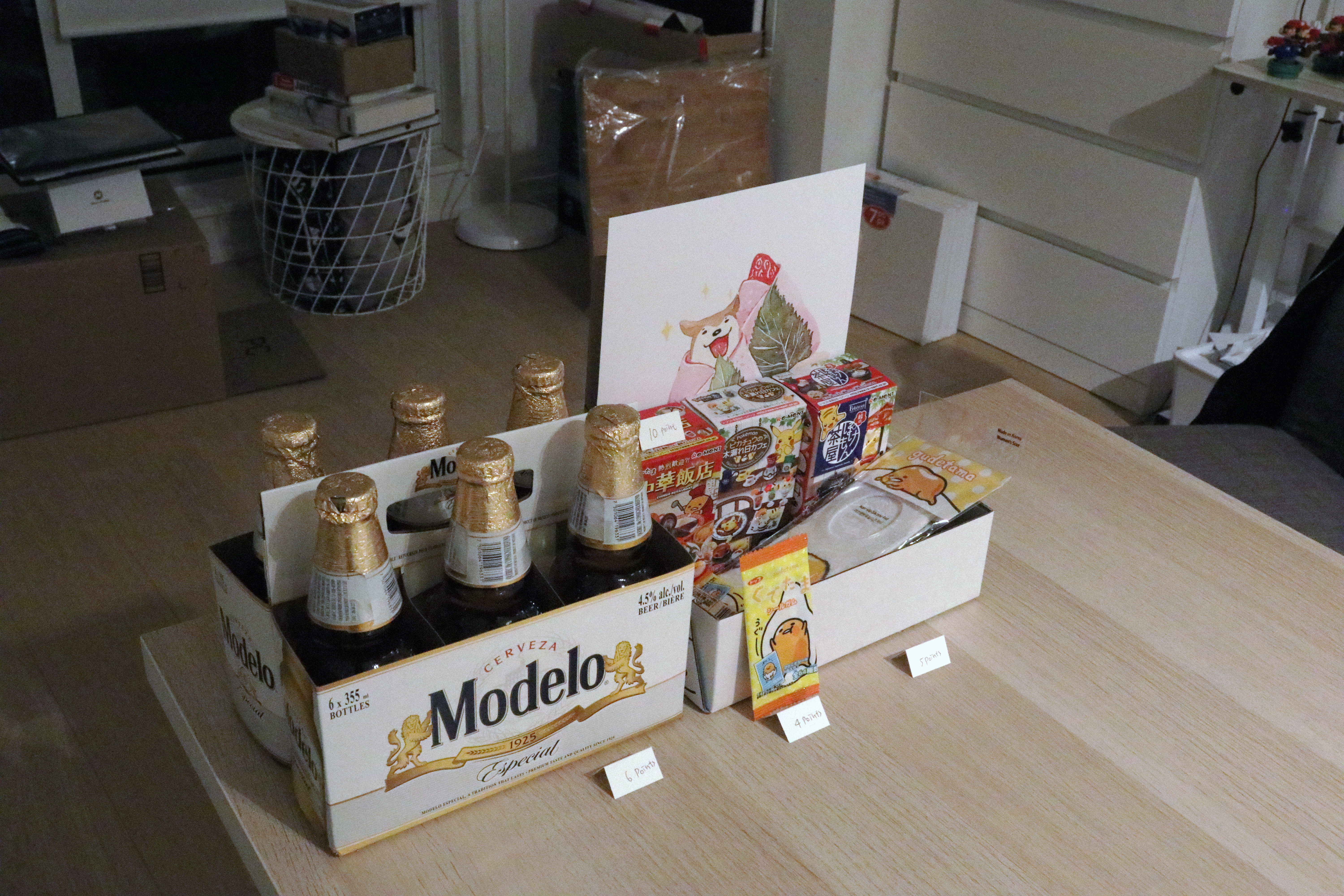
Price list of the rewards:
Toy: Ten points
Beer: Six points
Socks: Five points
Candy: Four points
The participants’ age is around 22 years old. All the participants used their credit cards before the game even started, and one of the participants wanted to use her credit card to buy all the rewards when she knew the limit of the credit card was 60 points. One of the participants overspent her credit card, and during the game, she felt anxious because she was afraid she would not earn enough points to pay her credit card bill.
One participant gave up on the game because she knew she was not smart enough to understand the questions, and her depressive mood showed on her facial expression. Two of the participants were more confident than the others, competed with each other, and tended to answer questions when other people hesitated. They even made fun of the overspending participants about not getting enough points to pay the bill. Overall, 75% of the participants in this workshop have the compulsive shopping behaviour pattern, and all of them have OCD behaviour pattern (Over Compared Disorder.)